This is part of a series of posts detailing the recreation of each song in Mémère’s Notebook, including their historical roots, various versions in print and field recordings, analysis of Elisa’s rendition, the process of researching the melodies, transcribing and translating the French lyrics, and the eventual arranging, performing and recording of these old Acadian folksongs for a modern audience.
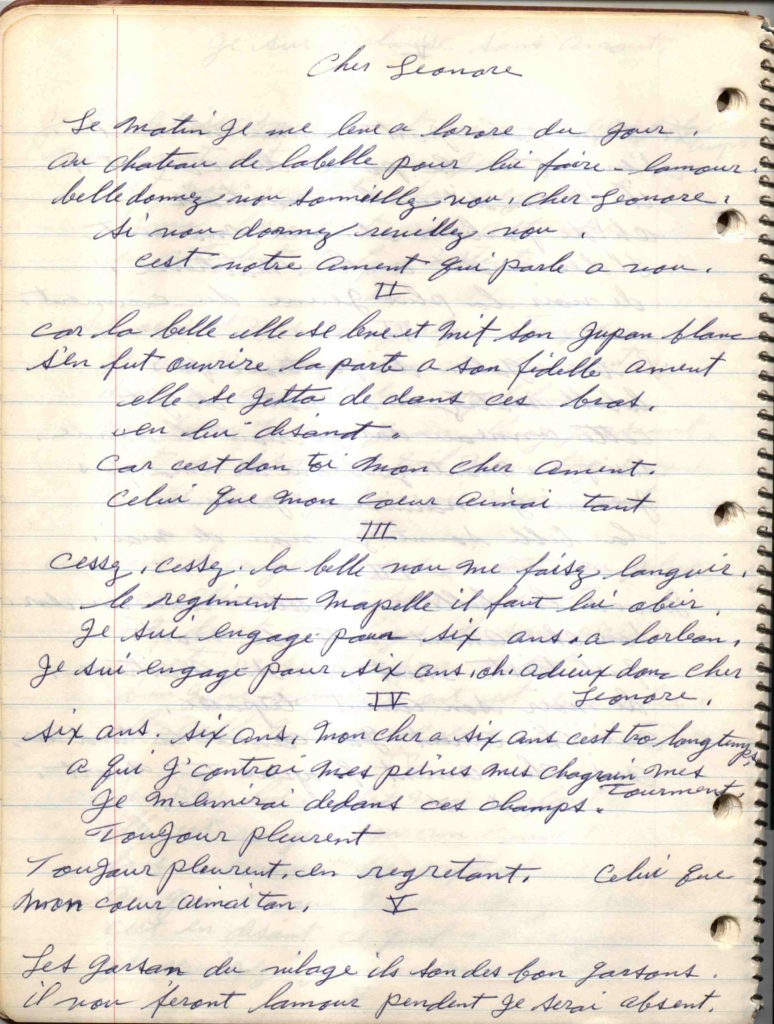
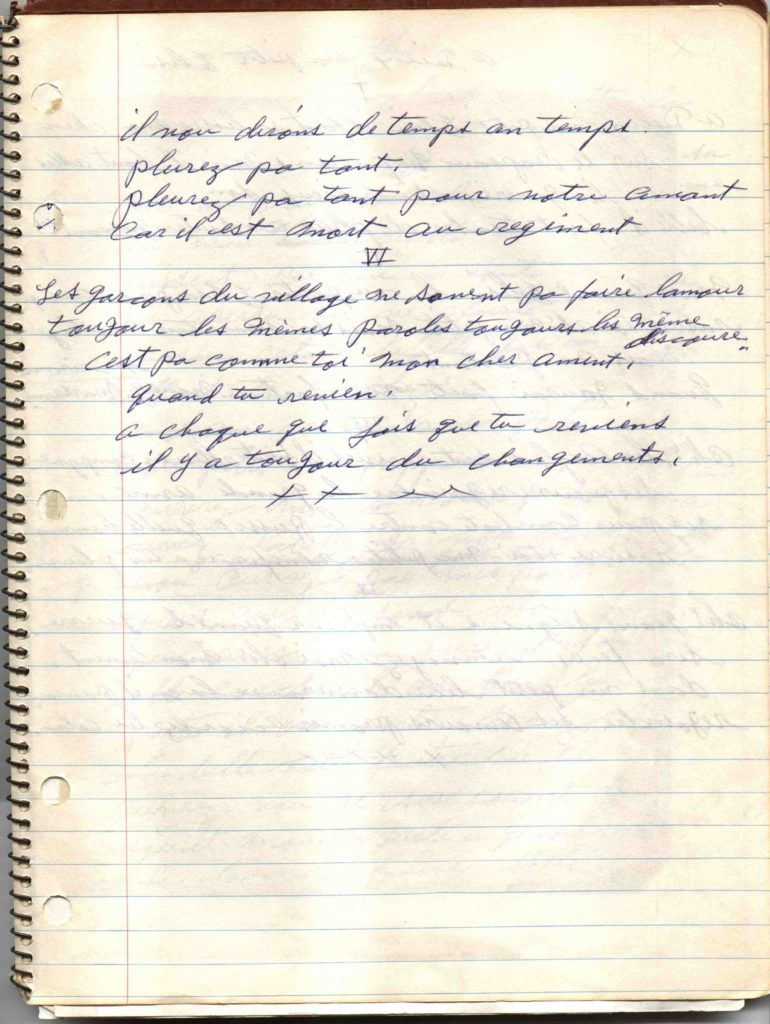
Chère Leonore, by many other names, appears to be one of the oldest and most widely shared of the Acadian Complaintes found in Mémère’s Notebook. A Complainte is a type of folk ballad commonly found in the Acadian repertoire, often characterized by an epic tale of tragedy told in stanzas of matched couplets known as strophic form, often ending with an ironic twist, or with a moral to the story. This one is no exception, and shares another common theme in Acadian ballads—that of a young woman left alone by her soldier boy as he goes off at war. In this oddly humorous telling, the young man’s bit of “advice” to his lover is to find solace in the arms of other boys in his absence. It’s hard for me to imagine my sweet and devout Mémère even joking about such a thing! Yet there it is, along with many other bawdy and hysterical lyrics in this amazing collection. Thus it’s up to us to figure out what our ancestors were trying to tell us about our culture, by keeping this story alive through an oral tradition that stretches as far back as the 19th century.
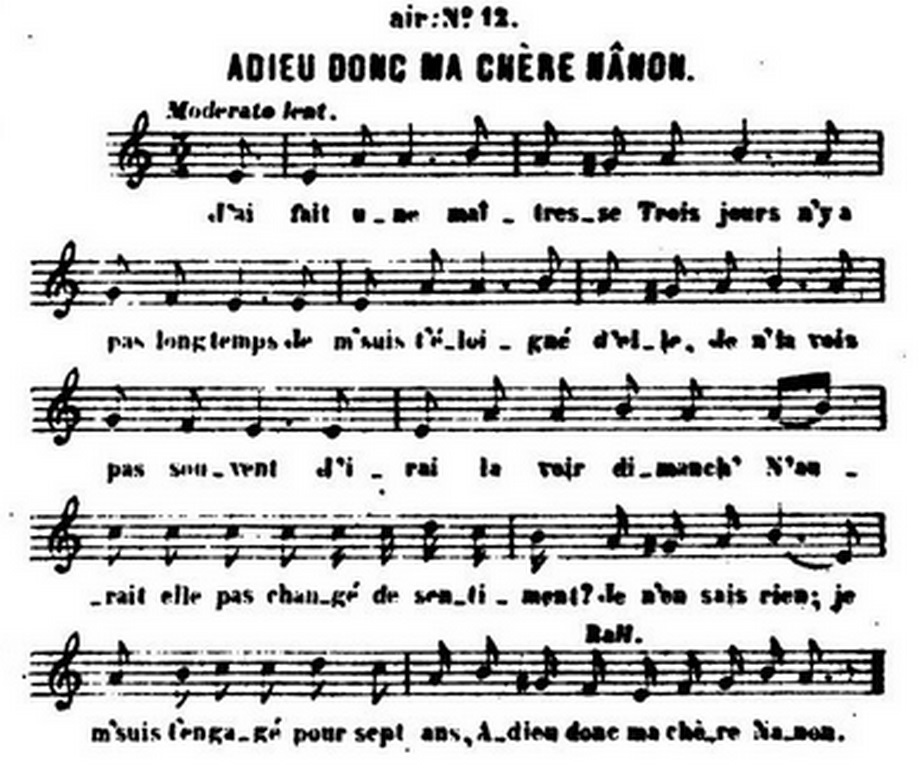
Among the many titles given to this song, here are a few:
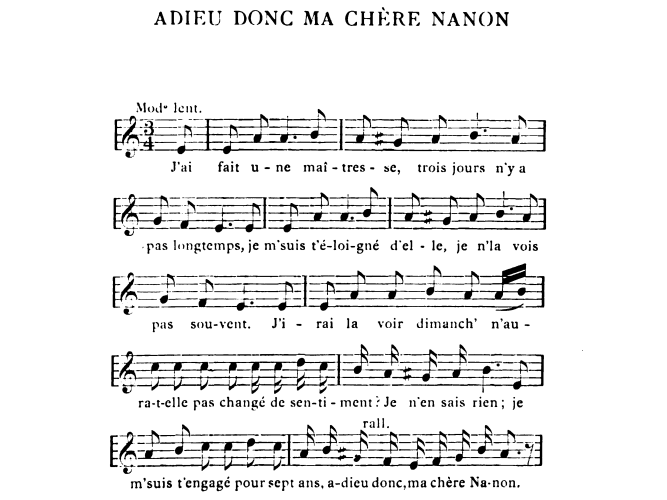
- Adieu donc ma chère nanon
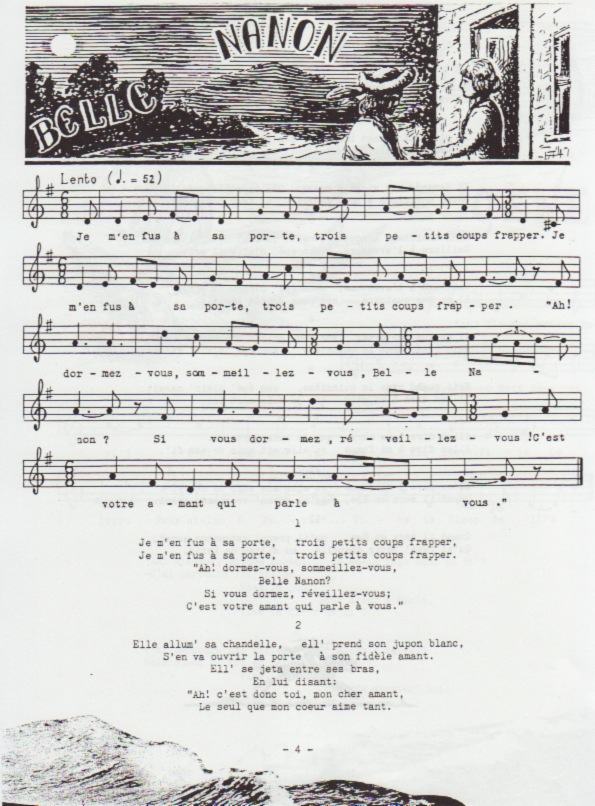
- Belle Nanon
- J’ai fait une maîtresse
- Un Matin Je me lève
- Je me lève au l’aurore du jour
Click on the title above to find the resource I used to research that version.
As you can see, there are myriad versions past down through the generations. Here are some versions that were recorded and released in France during the 70s and 80s:
The above versions have a distinctive modal character, owing to the drone of the hurdy-gurdy and the épinette des Vosges. This style hearkens to the medieval troubadour music that likely was the progenitor of many of these ballads. Indeed, some of these songs can be traced directly back to occitan chansonniers, and new trad musicians in the 20th century often looked back to early music in search of the purest forms of folk heritage style. My personal search was more focused on what I soon discovered is known by anthopologists as the “autochthonous” melodies—the ones from the place of the notebook itself. The more I searched in field recordings from places like the Archives Acadiennes at the University of Maine Fort Kent the closer I got to the version I imagine my Mémère must have heard in her head when she wrote these old songs down from memory. One thing is clear from comparing her lyrics to other versions I have found: these are passed down from memory, in the grand tradition of oral history and folklore. There is no one “standard version” but rather a living, evolving heritage of songkeeping.
More to come: